
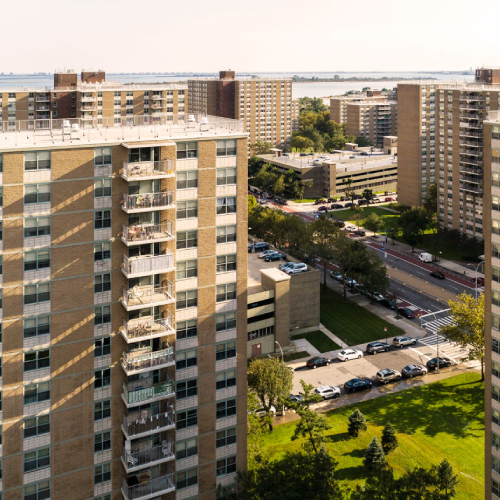
Commercial Real Estate Financing for Multifamily Properties: The 2025 Investor’s Guide
Multifamily real estate remains one of the most stable and in-demand asset classes in the United States, and especially in competitive markets like New York. Whether you’re acquiring a small apartment building or a large institutional property, securing the right commercial real estate financing is often the deciding factor between a successful investment and a missed opportunity.
In 2025, lending conditions continue to evolve with interest rate fluctuations, stricter underwriting standards, and increased focus on cash-flow stability. Understanding how multifamily financing works and which loan structures are available has never been more important.
Aspire Capital works with investors to structure and secure multifamily financing across New York and other major U.S. markets. Founded by Michael Rudd, the firm specializes in aligning borrowers with agency and non-agency lenders based on deal strength, asset performance, and long-term investment strategy.
This guide breaks down multifamily financing options, lender requirements, and how investors can secure optimal funding in today’s market.
Types of Multifamily Loans
Multifamily properties can be financed through several loan structures depending on size, strategy, and borrower profile.
1. Agency Loans
Agency lending is one of the most common forms of multifamily financing.
Fannie Mae and Freddie Mac both provide long-term, fixed-rate financing options for stabilized properties.
Key Features:
- Long amortization periods
- Competitive interest rates
- Non-recourse structures
- Stable, cash-flowing assets
Agency loans are ideal for stabilized multifamily assets with strong occupancy.
2. HUD Multifamily Loans
HUD 223f loans are designed for affordable and market-rate multifamily properties.
Benefits include:
- Very long loan terms
- High leverage options
- Fixed interest rates
- Low default risk
These loans are often used for refinancing stabilized apartment buildings.
3. Bridge Loans
Bridge financing is used for value-add or transitional multifamily properties.
Typical uses:
- Property renovations
- Lease-up stabilization
- Acquisition before permanent financing
Bridge loans offer flexibility but usually come with higher interest rates.
4. Permanent Multifamily Loans
Permanent loans are long-term financing solutions used once a property is stabilized.
They are often backed by agency lenders or private institutions.
Agency vs Non-Agency Financing
Understanding the difference between agency and non-agency financing is critical for investors.
Agency Financing
Agency loans from Fannie Mae and Freddie Mac are:
- Lower interest rate
- Strict underwriting
- Best for stabilized properties
- Long-term amortization
Non-Agency Financing
Non-agency loans are provided by private lenders.
They offer:
- More flexible underwriting
- Faster closing timelines
- Higher leverage options
- Greater risk tolerance
Choosing the Right Option
- Stable asset → Agency loan
- Value-add or distressed asset → Non-agency or bridge loan
Key Metrics Lenders Look At
Multifamily lenders rely heavily on financial performance metrics when evaluating deals.
1. Net Operating Income (NOI)
NOI is one of the most important indicators of performance.
NOI = Rental Income – Operating Expenses
2. Cap Rate
The cap rate helps determine property value based on income.
Cap Rate = NOI ÷ Property Value
3. Loan-to-Value (LTV)
LTV determines leverage risk.
4. DSCR (Debt Service Coverage Ratio)
DSCR measures the ability to cover loan payments.
DSCR = NOI ÷ Debt Service
5. Vacancy Rate
Lenders evaluate vacancy assumptions carefully to assess income stability.
Multifamily Bridge-to-Perm Financing
Bridge-to-perm financing is a popular strategy for multifamily investors.
It combines:
- Short-term bridge loan
- Followed by permanent financing
This structure allows investors to:
- Acquire undervalued assets
- Renovate and stabilize properties
- Refinance into long-term debt
When It’s Used
- Value-add apartment buildings
- Underperforming assets
- Properties requiring repositioning
Multifamily Financing in New York
New York remains one of the most active multifamily investment markets in the country.
Key Market Drivers:
- High rental demand
- Limited housing supply
- Strong institutional investment
- Competitive cap rates
Multifamily investments in New York often require creative financing strategies due to high acquisition costs.
How Aspire Capital Secures Multifamily Financing
Aspire Capital specializes in structuring multifamily financing solutions tailored to each investor’s strategy.
Led by Michael Rudd, the firm works across agency and private lending markets to secure optimal financing outcomes.
Our Multifamily Financing Process
1. Deal Analysis
We evaluate:
- Property performance
- Market conditions
- Income stability
- Expense structure
2. Lender Matching
We connect deals with:
- Agency lenders
- Banks
- Private debt funds
3. Structuring Strategy
We optimize:
- Loan terms
- Leverage levels
- Interest structure
4. Closing Support
We assist through underwriting and closing coordination.
Multifamily Mortgage Rates in 2025
Multifamily mortgage rates in 2025 are influenced by:
- Federal interest rate policy
- Property risk profile
- Loan structure (agency vs non-agency)
- Market conditions
Generally:
- Agency loans → lower rates
- Bridge loans → higher rates
- Value-add assets → higher pricing due to risk
Common Challenges in Multifamily Financing
1. Rising Interest Rates
Higher borrowing costs impact cash flow projections.
2. Strict Underwriting
Lenders require stronger DSCR and occupancy performance.
3. High Acquisition Prices
In markets like New York, cap rates remain compressed.
4. Vacancy Risk
Lenders carefully evaluate occupancy stability.
Why Multifamily Remains a Strong Investment
Despite challenges, multifamily real estate remains attractive due to:
- Consistent rental demand
- Inflation protection
- Scalable portfolio growth
- Institutional financing availability
Conclusion
Multifamily real estate continues to be one of the most resilient and scalable asset classes in commercial investing. However, securing the right commercial real estate financing is essential to maximizing returns and minimizing risk.
From agency loans backed by Fannie Mae and Freddie Mac to bridge financing and HUD programs, investors have multiple pathways to fund their acquisitions and developments.
Aspire Capital helps investors navigate multifamily financing in New York and beyond by structuring deals that align with lender requirements and long-term investment goals.

Author